
In this article
- What jobs can German language graduates do?
- What does a German-speaking call center offer new graduates?
- What level of German is expected in a German-speaking call center?
- How does what you learned in your language degree help in a call center?
- How do you make your first application as a new graduate?
- How does a career develop in a German-speaking call center?
- Turning your German studies into a profession at Vetraco
- Frequently asked questions
University graduates looking for a German-speaking job usually have more options than they expect: someone who has graduated in German Language and Literature, Translation and Interpreting or German Language Teaching can use that knowledge in translation, teaching, tourism, foreign trade, German-speaking call centers and many other fields. Once you hold the degree, the real question is in which job, under which conditions and on what development path you want to use your German.
This guide is written for new graduates who studied German. First we compare the common career options for language graduates, then we explain step by step what a German-speaking call center offers new graduates, what level of German is expected, how academic German differs from the German spoken on the phone and how to make your first application. Whichever path you choose, the aim is that you decide with the full picture.
The guide is written especially with candidates in mind who were born and raised in Türkiye and took their German to an advanced level at university; graduates who studied in Germany and moved to Türkiye ask the same questions. In both cases, if you want German at the centre of your daily work, the comparison below shows you where to start.
What jobs can German language graduates do?
German language graduates can work in many jobs that use the language every day, above all translation and interpreting, teaching, tourism, foreign trade and German-speaking call centers. Each field uses German differently: some are built on written texts, some on the classroom, some on face-to-face relationships and some on spoken communication over the phone. Which one suits you depends on the skill you most want to use and the kind of working pattern you are looking for.
The table below gives a broad comparison of the fields language graduates often consider. The information reflects the sector in general; each employer’s conditions may differ.
| Field | How German is used | Who it suits |
|---|---|---|
| Translation and interpreting | Written texts and spoken transfer | Careful people who enjoy terminology |
| Teaching | Teaching the language in class | Those who like explaining and guiding |
| Tourism and hospitality | Face-to-face contact with guests | Those who like a social, lively setting |
| Foreign trade | Correspondence, quotes and negotiation | Those interested in business and figures |
| German-speaking call center | Spoken communication on the phone | Those who enjoy talking and want regular hours |
Translation and interpreting
Translation is the most natural path for translation and interpreting graduates and can take different forms, such as written translation, spoken interpreting, localisation or editing. Care for the text, knowledge of terminology and the ability to move between two languages without losing meaning are decisive in this work. Both freelance and in-house work are common in the sector; which suits you depends on whether you prefer a regular office setting or your own schedule.
Teaching and education
Teaching is the field German Language Teaching graduates are trained for; teaching German in schools, language courses or one-to-one lessons are the main options on this path. The work requires explaining grammar systematically, patience and following each learner’s progress. Teaching experience gives you the ability to explain a complex topic in simple sentences, and that skill is also very useful when speaking to customers on the phone.
Tourism, foreign trade and other fields
Tourism and hospitality is a lively field for those who enjoy face-to-face contact with German-speaking guests; reception, guiding and guest relations are typical tasks. In foreign trade, German is used for correspondence, preparing quotes and talking to business partners. Publishing, cultural institutions and an academic career are also among the paths language graduates consider. Each field has its own working pattern; thinking ahead about conditions such as seasonal peaks, travel or long preparation periods makes the right decision easier.
How do you decide which field to choose?
The soundest way to choose the right field is to ask yourself a few clear questions first. Many new graduates decide only by the name of their degree, yet how the working day goes, which skill you use and how often, and how the working hours fit your life matter at least as much. The questions below help you rank your options by your own priorities. As your answers become clearer, it also becomes obvious which openings to apply for.
- Do you want to use German mainly in writing or in speaking?
- How important are regular hours and weekends off to you?
- Do you prefer to work on your own or as part of a team?
- Do you want to start right after graduation, or do you have time for an extra preparation period?
What does a German-speaking call center offer new graduates?
A German-speaking call center opens the door for new graduates to a job where they actively speak German every day, with a regular working pattern and without any experience requirement. What you learned in your language degree is used directly here: every call means speaking German in a real communication situation. This turns the language from something learned at school into an everyday professional skill.
At Vetraco, projects are built on outbound calling to German-speaking markets: the German-Speaking Customer Advisor calls German-speaking customers on behalf of a brand. The role is full-time and office-based; the sections below explain what this setup means for new graduates.
Fixed working hours and weekends off
At Vetraco, the German-Speaking Customer Advisor works fixed hours and has weekends off. For new graduates, this means being able to plan your day and week in advance while getting used to working life: you can keep your evenings and weekends for family, friends or your own development. A regular schedule makes balance easier, especially in your first job; for more on this topic, see our article on work-life balance.
Office-based work and a team setting
The role is office-based; there is no home-office option. For new graduates, working in an office means a team you can ask questions straight away and the chance to learn from experienced colleagues. The offices are easy to reach by public transport and are located in several provinces of Türkiye; you can find the one nearest to you on our offices page. Being part of a team also speeds up the transition from university to working life.
No experience required, training provided
At Vetraco, no call center experience is required; training is provided when you start. This means you can apply right after graduation. In the sector, starter training usually introduces the call flow, the systems used, recording rules and the brand being represented; the recruitment team gives details about Vetraco’s training during the interview. For more on starting without experience, read our article on German-speaking jobs without experience.
What level of German is expected in a German-speaking call center?
At Vetraco, native-level or advanced German is expected for the German-Speaking Customer Advisor. This means being able to hold a fluent, natural and clear conversation with a German-speaking customer on the phone. Most language graduates are at or close to this level; what counts is not the grade on your diploma but how comfortable and clear you are when you speak.
If you want to see in detail how to assess your level, take a look at our article on what level of German you need for a call center. The German interview in the application process is the clearest way to see your level in practice.
The difference between academic German and German on the phone
Academic German relies on long, complex sentences, literary or theoretical texts and written expression; German on the phone is spoken communication that runs on short, clear and quick sentences. Analysing Goethe, writing a linguistics paper or translating a contract gives you a strong command of the language. On the phone, however, you need to react correctly within seconds without seeing the other person. The two skills complement each other, and the gap usually closes with a little practice.
Forms of address, tone and set phrases
On the phone, customers are always addressed as Sie with their surname, and requests use polite forms such as “könnten” and “würden”. Instead of the heavy structures common in academic texts, simple and warm language is preferred. There are established phrases for opening a call, stating its purpose and saying goodbye; knowing them in advance makes the first days much easier. For sample sentences, see our article on German phone phrases.
Speed, accents and listening
On the phone, customers speak at their natural speed, sometimes with a regional accent and everyday expressions; this can differ from the clean pronunciation in textbooks. That is why listening is at least as important as speaking. Listening to German podcasts, radio and series is a practical way to train your ear for different accents. Politely asking someone to repeat what you did not understand is part of being professional, and customers find it natural.
How does what you learned in your language degree help in a call center?
What you learned in your language degree is directly useful in a call center: command of grammar, cultural knowledge, quick switching between two languages and the ability to explain a topic clearly form the basis of being a strong German-Speaking Customer Advisor on the phone. Each degree builds slightly different skills, but all of them pay off in this work.
The study habits you built at university are valuable in this work too. Preparing presentations, reading a text carefully and extracting the main idea, planning your time during exam periods and improving yourself based on feedback are all skills you will use on the phone every day. The list below briefly sums up the strengths each of the three language degrees brings.
- German Language and Literature: you know the culture, etiquette and nuances of German-speaking societies, which helps you find the right tone with customers.
- Translation and Interpreting: your habit of thinking quickly between two languages and conveying meaning accurately helps you find the right expression instantly on the phone.
- German Language Teaching: your ability to explain a complex topic step by step and patiently stands out when you explain an offer or a process clearly to a customer.
How do you make your first application as a new graduate?
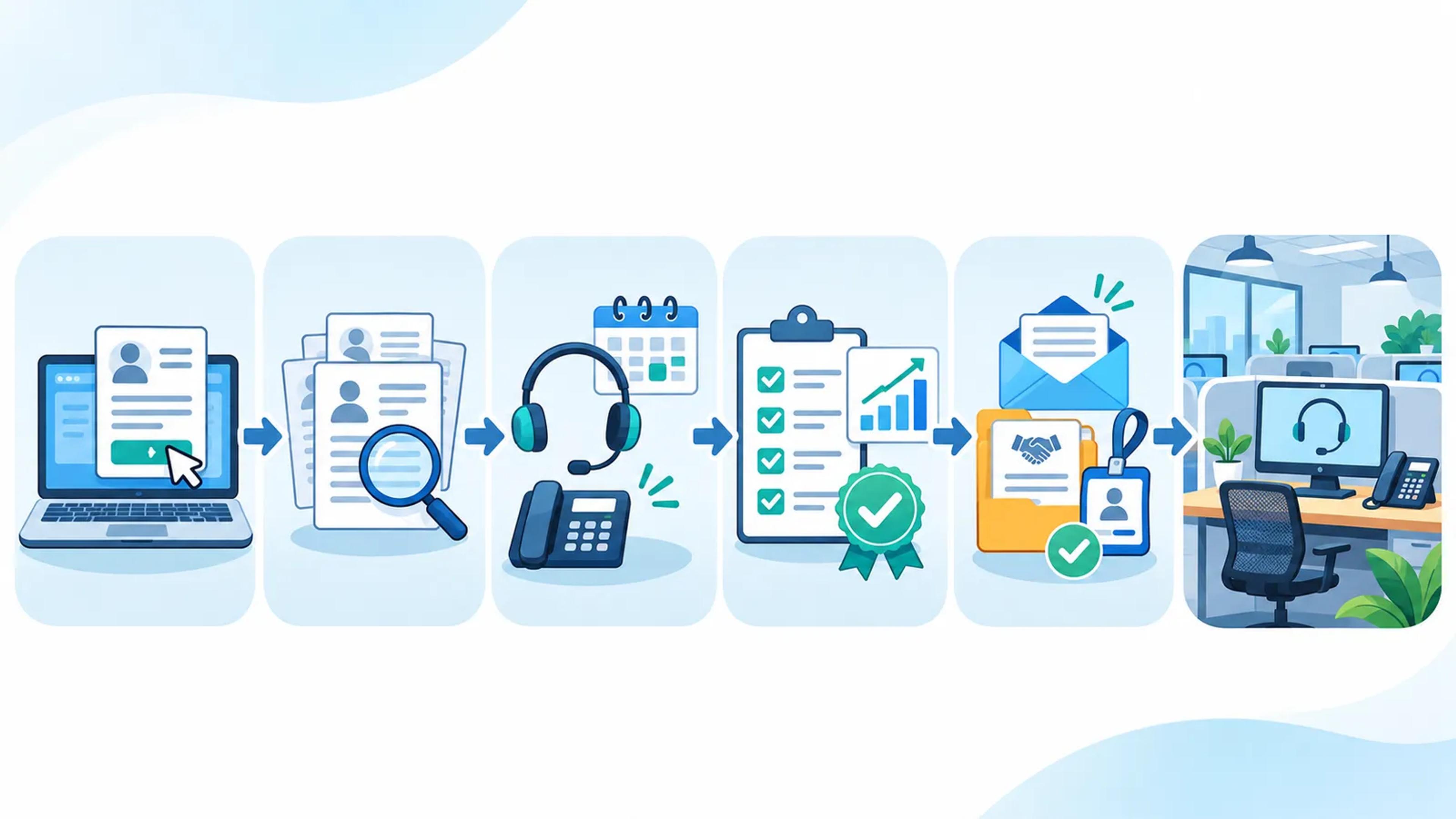
You make your first application to Vetraco by filling in the application form on the website; after the form arrives, the team calls you, then an interview in German takes place and a suitable candidate receives an offer. The process is short and clear; as a new graduate you do not need to list work experience. Candidates are never asked for any fee during recruitment.
The application steps are:
- Fill in the application form: share your name, contact details and German level.
- Keep your phone at hand: the recruitment team calls you and explains the process.
- Take part in the interview in German: introduce yourself in German and answer naturally.
- Consider the offer: if you are a good fit, you receive a job offer.
How should you prepare for the interview?
The most effective way to prepare for the German interview is to describe yourself, your studies and why you want this job out loud in German a few times. As a language graduate, you can highlight your degree and mention experiences such as internships, volunteering, Erasmus or summer school. If your CV is not ready or you want to create a German CV, our German CV guide makes it easier; for all steps of the process see our article on the call center application process, and for common questions see German call center interview questions.
How does a career develop in a German-speaking call center?
A career in a German-speaking call center develops as you take on more responsibility within the team, building on your experience on the phone. In the sector, common paths after the customer advisor role include supporting newcomers in the team, taking on tasks in areas such as quality and training, or moving towards team management. Vetraco offers opportunities for promotion and career development; the recruitment team explains which roles and criteria apply during the interview.
This development path is especially meaningful for language graduates, because while you keep using German every day, you also gain skills valued in every sector, such as communication, persuasion, time management and teamwork. Competitive pay and bonus opportunities, together with regular hours, make a solid foundation. To see the possible steps in more detail, read our article on career steps in a call center, and for a general view of career planning, our article on career management.
Turning your German studies into a profession at Vetraco
Vetraco was founded in 2009 in Mönchengladbach, Germany, and has become a pioneering brand in Türkiye’s German-speaking call center sector. The German-Speaking Customer Advisor role offers new graduates who studied German a full-time job where they speak the language every day: fixed working hours, weekends off, office-based work, training when you start and the chance to apply without experience. The one core requirement is native-level or advanced German.
For a general overview of other fields where you can work with German, read our article on job opportunities for German speakers, and see the open positions on our job openings page. If you are ready, fill in the application form and the team will call you.
Frequently asked questions
What jobs can German language graduates do?
German language graduates can work in many fields that use the language daily, such as translation and interpreting, teaching, tourism, foreign trade and German-speaking call centers. The choice depends on the skill you want to use and the working pattern you are looking for.
Can new graduates apply to a German-speaking call center without experience?
Yes. At Vetraco, no call center experience is required and training is provided when you start. The core requirement is native-level or advanced German.
Is a language degree enough to prove my German level?
A degree is a strong foundation, but what counts is speaking fluently and clearly on the phone. Your level is assessed in practice during the German interview in the application process.
What are the working hours in a German-speaking call center?
At Vetraco, the German-Speaking Customer Advisor works full-time, with fixed working hours and in the office; weekends are off.
Do I have to pay a fee to apply?
No. Vetraco never asks candidates for any fee during recruitment. You apply free of charge through the form on the website.